Care Without Walls
Thursday, August 6, 2026
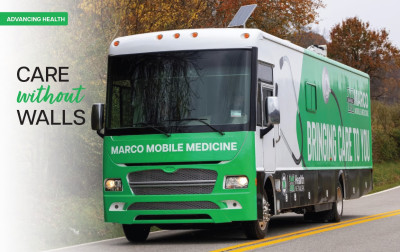
Telehealth, mobile medicine and community partnerships are bringing specialty care closer to home across rural Appalachia
For many families across rural Appalachia, seeing a specialist can mean hours on the road. It’s not uncommon for patients to travel two or three hours for appointments that are brief but essential to their care. Geography, transportation challenges and provider shortages have long made it difficult for people in West Virginia, southern Ohio and eastern Kentucky to access the same level of care available in larger cities.
Today, that reality is beginning to change. Marshall Health Network is playing a key role in the transformation of care across rural communities, expanding care beyond traditional hospital walls and bringing specialists, technology and innovative programs directly into the communities that need them most.
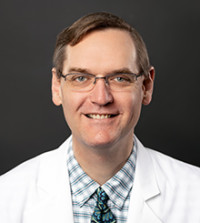 "Access to care remains one of the greatest challenges in rural health,” said Adam Franks, MD, CPE, professor and vice dean for rural health at the Marshall University Joan C. Edwards School of Medicine and board-certified family medicine physician at Marshall Health Network. “Through telehealth, mobile medicine, community partnerships and workforce development, Marshall Health Network is helping ensure patients across rural Appalachia can receive high-quality care closer to home.”
The Digital Lifeline
Technology is transforming how care is delivered in rural communities. From telehealth to remote monitoring systems, specialists collaborate with local care teams in real time, helping patients receive advanced care without leaving their communities or homes.
One example is telestroke services. Stroke remains the nation’s fifth-leading cause of death and a leading cause of long-term disability. Because treatment is extremely time-sensitive, rapid evaluation by a specialist can significantly improve outcomes.
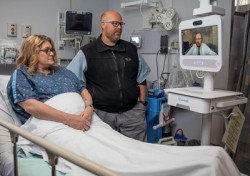 Using secure video technology and imaging review, stroke specialists in Huntington can evaluate patients remotely, guide emergency physicians through treatment decisions and determine whether a patient should receive clot-busting medication or be transferred for advanced care. Telestroke services are currently available at Marshall Health Network - Rivers Health in Point Pleasant, West Virginia; Three Rivers Medical Center in Louisa, Kentucky; Logan Regional Medical Center in Logan, West Virginia; and the Marshall Health Network - St. Mary’s Medical Center Emergency Room in Ironton, Ohio.
Telehealth is also expanding access to care for high-risk pregnancies. Patients can consult with Marshall Health Network maternal-fetal medicine specialists through video visits conducted at their local physician's office, where local physicians and ultrasound technicians assist during the examination while specialists guide the care plan.
Digital collaboration further supports patients requiring the highest levels of care. Through virtual intensive care unit (tele-ICU) technology, critical care specialists remotely monitor patients while working closely with bedside teams to review vital signs, laboratory results and imaging.
Meanwhile, technology also helps families remain connected during some of life’s most delicate moments. In the neonatal intensive care unit at Marshall Health Network - Hoops Family Children’s Hospital, NICVIEW cameras allow parents and family members to securely view their newborns online 24 hours a day.
“Even with full confidence in the NICU team as a pediatric physician, nothing prepares you for leaving your own baby at night,” said Madison Anderson, MD, assistant professor of pediatrics at the Marshall University Joan C. Edwards School of Medicine and pediatric hospitalist with Marshall Health Network, who is also a new mother. “Even when parents can’t be physically at the bedside, they can still see their baby and stay connected.”
Care on the Move
While telehealth connects specialists virtually, some programs bring care directly into rural communities.
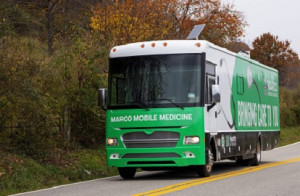 In 2025, Marshall Health Network unveiled its new Marco mobile medicine initiative, anchored by a 38-foot mobile clinic designed to eliminate transportation barriers and expand access to care.
The clinic includes two private exam rooms, a telehealth suite, a blood draw area, a restroom, a waiting space and Starlink internet. Through in-person visits and virtual consultations with Marshall Health Network specialists, patients can receive preventive care, screenings and chronic disease management without traveling long distances.
Marshall Health Network providers also take to the road to deliver onsite occupational medicine services to more than 89 employers across the region and sports medicine coverage at sporting events throughout southern West Virginia.
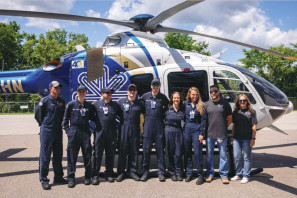
HealthNet allows flight nurses and paramedics to reach patients in remote communities quickly and safely
Taking to the Skies: HealthNet’s New Helicopter
When every minute matters, rapid medical transport can save lives. Based at Cabell Huntington Hospital since 1980, HealthNet has provided emergency transport connecting patients across the Tri-State region to specialty care.
The newest addition to the fleet, introduced in spring 2026, expands the program’s ability to reach remote communities quickly and safely. Staffed by highly trained flight nurses and paramedics, the aircraft functions as a flying intensive care unit equipped with advanced life-support technology.
HealthNet ensures patients receive the care they need when time is critical.
Care Close to Home
Mobile units and telehealth are only part of the solution. Marshall Health Network is expanding access through a growing network of clinics located in the communities it serves, bringing care closer to where patients live and work. With many locations offering convenient online scheduling, it’s easier than ever for patients to connect with care at a time that works for them.
These sites provide primary care, specialty services and occupational medicine programs that support both patients and local employers. Occupational medicine teams deliver services such as pre-employment exams, injury treatment and return-to-work evaluations, helping keep employees healthy and businesses operating safely.
Across the region, patients can access primary care, cardiology, orthopaedics, rehabilitation services and more closer to home. From Point Pleasant to Kermit to Logan, West Virginia, and Louisa, Kentucky, Marshall Health Network is expanding access to care where it matters most—within the communities we serve.
Building the Rural Workforce
Expanding access to health care in rural communities requires more than technology and outreach. It requires people.
Marshall Health Network and Marshall University are working together to build the next generation of rural health care professionals through a series of coordinated initiatives.
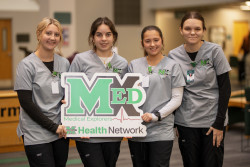 That work begins early. The Medical Explorers (MedEx) Program is a two-year program that introduces high school students to health care careers through hands-on experiences alongside Marshall Health Network team members. Developed in partnership with Cabell and Wayne County schools, the Education Alliance and the West Virginia Department of Education, MedEx helps students explore career pathways and build workforce-ready skills that can carry them into the workforce. The program’s first class graduated in spring 2026.
At the Joan C. Edwards School of Medicine, that outreach extends through initiatives like NeuroAppalachia, a student-led program that uses interactive neuroscience education to spark curiosity and awareness of health care careers, and Project PREMED, which helps undergraduate students explore medical careers and prepare for medical school applications.
That pipeline continues through graduate medical education. Marshall offers rural residency programs for psychiatry, internal medicine and general surgery—the only residency of its kind in the nation—designed to train physicians in the communities where they are most needed. Through partnerships with sites including Marshall Health Network - Rivers Health, Holzer Health System and Logan Regional Medical Center, residents complete a significant portion of their training in rural settings, increasing the likelihood they will remain in those communities to practice.
Together, these efforts reflect a long-term strategy: grow talent locally, train in rural environments and strengthen access to care across the region.
Reaching Patients Where They Live
From telehealth consultations and mobile clinics to rural training programs and community-based clinics, Marshall Health Network is redefining how care reaches patients throughout the Tri-State region.
Specialists are no longer limited by geography. Technology is helping close long-standing gaps in access, and communities that once faced long journeys for care are beginning to see services closer to home.
Health care is no longer confined to buildings. It is reaching patients where they live—advancing the broader vision of a stronger, more connected rural health system across West Virginia.
More news...
Marshall Health Network welcomes new internal medicine specialists
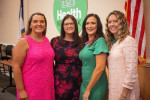
18th annual Ladies in Pink Luncheon celebrates hope, supports local breast cancer patients

Wellness Wednesday: Pumpkin Chili

Keeping our little ghosts and goblins safe for trick-or-treat

Marshall Health Network offers families opportunities for safe Halloween fun

Marshall Health Network Foundations to host second annual PROACT Monster Smash Pickleball Bash Oct. 24

Marshall Health Network names new medical director of Edwards Cancer Institute